


CBD oil and water-soluble CBD are both popular CBD product types that can fit into most daily routines. They share some similarities, but also have key differences that make them distinct from one another. These distinctions often help users choose the product type that is most suitable for their personal needs and preferences. This article covers what each of them are, the similarities they share, and the important differences that set them apart.
What is CBD oil?
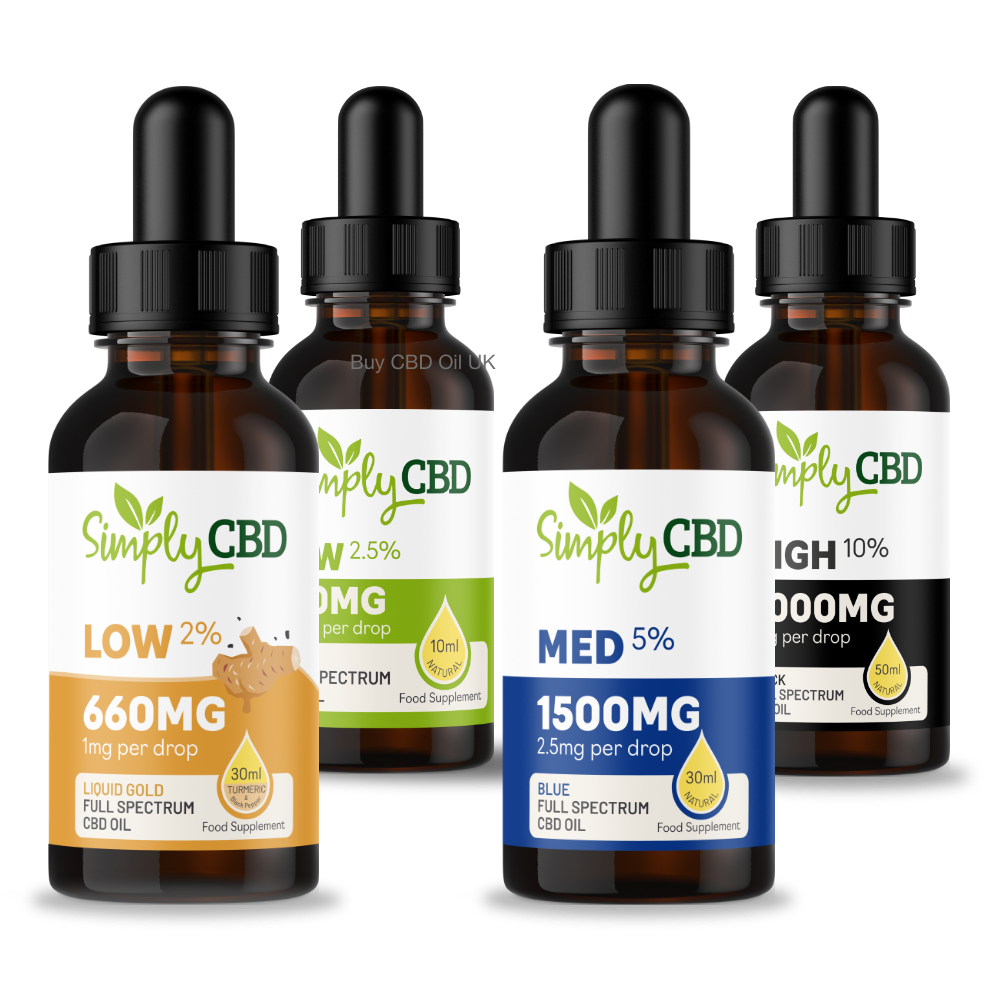
CBD oil is the most popular type of CBD product. It typically contains hemp extract (which may include one or more cannabinoids depending on the profile of the product) mixed with a carrier oil like hemp seed oil. Hemp extracts are easy to combine with oil bases because all cannabinoids, including CBD, are naturally fat soluble. Most CBD oils have an earthy, natural taste from both the extract and the carrier oil, although some contain added natural flavours like lemon or mint.
There are various ways to consume CBD oil, from adding it to oil-based recipes to ingesting it on its own. We recommend taking CBD oil sublingually (under the tongue), where you hold your desired number of drops for one to two minutes before washing them down with a glass of water. This method allows CBD and other cannabinoids to absorb via the thin mucous membranes under the tongue directly into the bloodstream, with the remainder absorbing via digestion. Using CBD oils is simple, quick, and easy to fit into any routine, making it a daily staple in many wellness regimens.
What is water-soluble CBD?
Water-soluble CBD is a fast-growing favourite among many CBD users. It contains nano-emulsified CBD, which means it has been broken down into tiny, microscopic particles. The extract, which can be isolate, broad spectrum, or full spectrum, is then suspended in a water base rather than a carrier oil. This allows the cannabinoids to disperse evenly when added to liquids and helps improve dispersion in the digestive system. Most water-soluble CBD products are taste-free, which is ideal for those who struggle with the earthy taste of oils.
Taking water-soluble CBD is as simple as adding your desired dose to any hot or cold drink, whether it be a morning coffee, a smoothie, or just a glass of water. It can also be included in liquid-based recipes. This type of CBD is associated with high bioavailability because in addition to smaller particles, it is more easily integrated into water-based systems, including digestive fluids. Between its advanced absorption rates, versatility, and ease of use, it is becoming a well-loved product among many regular CBD users.
Key similarities and differences
Here is a closer look at the key similarities and differences between CBD oil and water-soluble CBD:
Similarities
Key similarities shared between the two product types include:
- Both contain natural hemp-derived CBD extracts
- Both can be full-spectrum, broad-spectrum, or isolate-based
- Both are ingested forms of CBD (taken orally in different ways)
- Both pass through the digestive system at some stage
- Both can be used in recipes (in different contexts)
- Both offer an easy way to take CBD daily
Differences
Key differences between the two product types include:
- CBD oil is oil-based and relies heavily on sublingual absorption while water-soluble CBD is nano-emulsified and absorbs via the digestive system.
- Oils contain CBD in larger lipid-bound molecules while water-soluble CBD is broken into much smaller, nano-sized particles.
- Oils are fat-soluble and absorb better when taken with foods high in healthy fats, while water-soluble CBD naturally integrates into water-based systems.
- Oils have a stronger, more natural hemp taste, while water-soluble is more neutral/taste-free.
- Oils are typically taken on their own while water-soluble CBD is typically used in beverages or water-based recipes.
- Oils separate when added to water while water-soluble CBD disperses evenly throughout liquids.
Key takeaways
Here are the key points to remember about water-soluble CBD and CBD oils:
- CBD oil is the most popular form of CBD product, and suits people who prefer to take CBD sublingually.
- Water-soluble CBD is associated with advanced absorption and bioavailability, and suits people who prefer taste-free products that can be added to any beverage.
- CBD oil and water-soluble CBD both deliver CBD from hemp but in different forms.
- The main distinctions include how they are formulated and how they behave when taken.
- Both product types are effective in their own ways, with most users finding that one suits them more than the other.